
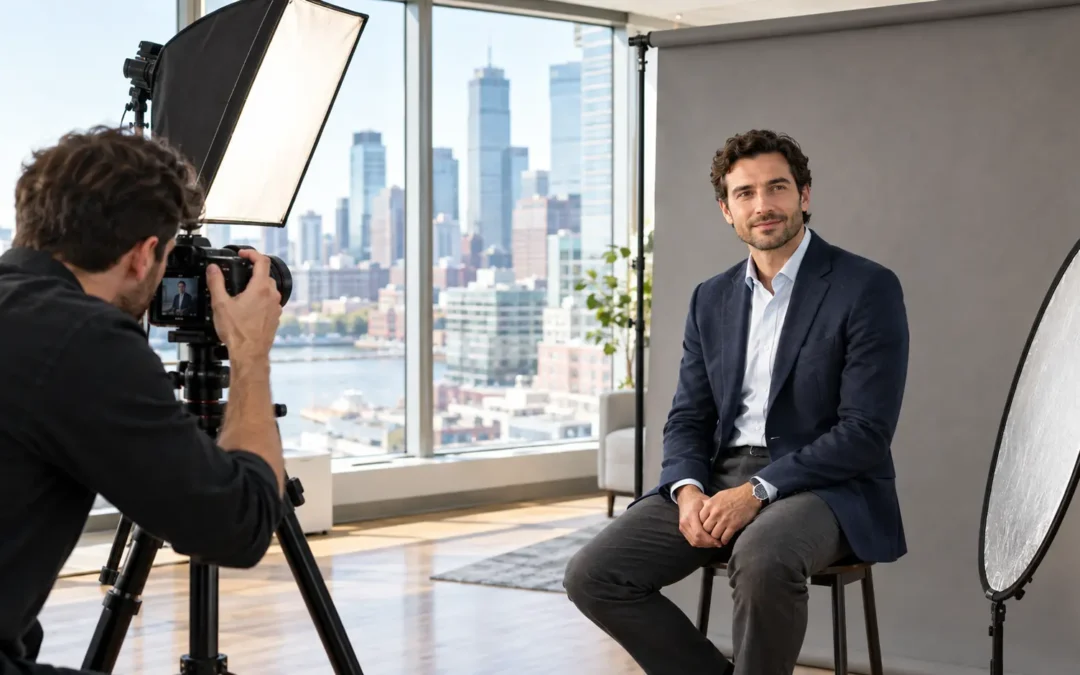
Boston corporate photographers create professional business portraits by working from a written spec before the shoot, fixing light and background so every person in a team matches, directing a short session toward a specific expression, choosing frames against the spec instead of by taste, retouching within agreed limits, and delivering files under a clear usage license. The camera is the smallest part of the job. Consistency and fit for purpose are what a company is buying.
Why one good photo is not the goal
Viewers judge faces fast. In a Princeton study published in Psychological Science, judgments made after a 100 millisecond exposure correlated highly with judgments made without time limits (Willis & Todorov, 2006). A later study found that photos of the same person can produce different impressions, with variation between images of one individual comparable to or larger than variation between different people (Todorov & Porter, 2014).
My interpretation: a portrait is not a record of a face. It is a choice about which version of a person a stranger meets first. Both studies measured lab ratings, not hiring or sales outcomes, so treat them as a reason to be deliberate, not as a conversion statistic.
For teams the bar is higher. If a website team page mixes a bright window-lit portrait with a dim ceiling-lit one, visitors read the lighting difference as a difference between people. That is why working photographers sell a system, not a frame.
The workflow, step by step
1. Write the portrait spec: Before anyone books a slot, settle four things: where the image appears (LinkedIn, website grid, conference badge, press kit), the crop (a team grid needs identical head size, and a profile photo is viewed small in a circle), the tone (approachable or authoritative), and who signs off. A pre-shoot call helps here. Some photographers, such as Boston professional portrait photographer Felix Gaertner, start with a Zoom consultation, which is a sensible place to settle the spec.
2. Choose the location and background: Options are a studio, a neutral wall inside the client’s office, or an environmental setting. The deciding factor is whether the light can be controlled. Window light shifts across a six-hour team day, so someone shot at 10 a.m. will not match someone shot at 3 p.m. In Boston, December sunsets arrive before 4:30 p.m., so afternoon daylight is unreliable for a team day.
3. Lock the lighting before the first person sits: Typical practice is a key light, a fill or reflector, and fixed distances, with marks on the floor for subject and camera. Once it works, it does not change. This is what makes thirty portraits look like one set.
4. Direct the session: Individual corporate headshot sessions typically run 15 to 30 minutes, and team members are booked into time slots. Within that time, photographers usually capture three registers: serious, soft smile and open smile. Small physical adjustments do most of the work: shoulders turned slightly off the camera, chin forward and a little down, eyes on the lens. Talking to the person usually beats counting down to the shutter.
5. Select against the spec: A good photographer shows a short list, not 200 frames. Check candidates at avatar size (about 100 pixels). Many portraits that look strong full screen fail there because the expression is too subtle.
6. Retouch within written limits: Reasonable scope: temporary blemishes, stray hairs, collar and clothing creases. Out of scope unless requested: reshaping features or removing permanent marks. The test is simple. The person should be recognizable when they walk into a meeting.
7. Deliver with a license: Under US law a photographer is generally the author. A commissioned photo is a work made for hire only in narrow cases: the work must be specially ordered for certain uses and both parties must sign a written agreement saying so, according to the US Copyright Office. In practice most companies receive a license. Confirm in writing the permitted uses (web, print, social, press), the duration, and whether employees can keep using their portraits after they leave. This is general information, not legal advice.
Studio, office or AI: how to choose
On-site setups suit teams because staff stay near their desks and the background is identical for everyone. A studio suits executives and individuals who want more time and control. AI headshots are the fastest option, but most published comparison content is written by the vendors who sell them, so read claims accordingly. My opinion: AI is a stopgap for a remote hire’s first week. It does not replace a real session for press, speaking or leadership pages.
Boston logistics that affect the schedule
Commercial towers in the Seaport, Back Bay and Financial District commonly ask outside vendors for a certificate of insurance, a booked freight elevator or loading dock, and visitor registration. Ask your property manager before you fix a date. Some lab and clinical areas restrict equipment or photography, so portraits for Cambridge biotech teams are often shot in a conference room instead. Build load-in and parking time into the schedule. These are common commercial-building practices, not a verified rule for every address.
What affects the cost
Quotes vary because the work varies. Five factors move the price most:
- Headcount: larger teams usually mean a lower effort per person, because the lighting is set once.
- Session type: a studio visit, an office setup and an environmental shoot involve different time and equipment.
- Retouched images per person: confirm how many finished images each person receives.
- Licensing scope: web only is different from web, print, social and press use over several years.
- Logistics: travel, load-in, building requirements and a make-up day for absent staff all add time.
Always ask for a per-person quote at your exact headcount, in writing, with the number of retouched images and the license terms included.
What “top rated” should mean when you hire
When you search for a top rated photographer in Boston, remember that a star rating only tells you people were satisfied. It does not tell you the photographer can keep thirty people consistent. Use this checklist instead:
- Full-team galleries in the portfolio, not only individual hero shots
- A written quote stating retouched images per person and turnaround
- A written license, with usage and duration spelled out
- A plan for absent staff (a make-up hour or second day)
- Reviews that mention team or corporate work specifically
- A willingness to share the spec or brief format they use
Common mistakes
1. Shooting beside a window and calling it natural light, then watching the team drift in tone by afternoon.
2. Skipping the spec, so the crop breaks the team grid.
3. Letting employees choose from 100 frames, which produces second-guessing.
4. Over-retouching, which makes people look unlike themselves.
5. Never reading the license, then discovering it excludes print or press use.
Planning your own portrait day
Start with the spec above, then brief your chosen portrait photographer in Boston before booking, or request a quote for corporate headshots in Boston with your headcount, location and usage needs ready.
Frequently Asked Questions
What affects the cost of corporate headshots in Boston?
Pricing depends on headcount, session type, retouched images per person, licensing scope and location logistics. Ask for a per-person quote at your exact team size.
How long does a corporate headshot session take?
Individual sessions typically run 15 to 30 minutes. A team day is scheduled in time slots, so each person fits around their normal work.
Studio or on-location?
On-location suits teams because staff stay near their desks and the background matches. A studio suits executives and anyone who wants more time and control.
Who owns the photos?
The photographer is generally the author. Most clients receive a license, unless a valid work-for-hire agreement or a written assignment says otherwise. Confirm usage rights in writing.
Will retouching change how I look?
It should not. Agree on limits before the shoot: temporary blemishes and stray hairs are fine to fix, but your features and permanent marks should stay unchanged.